

The search for a serene holiday can feel like a meaningful quest for peace. Japanese gardens provide a perfect answer to the noise of daily life. These gardens are living art forms built from ancient philosophical principles. They capture the pure spirit of nature within a designed space. Each stone and tree holds a purpose to create visual harmony. Visitors can leave their daily stress at the garden gate. For a truly serene escape, these destinations in Japan are essential.
The Philosophy of the Garden
Japanese gardens follow specific and timeless design principles for harmony. Designers create miniature landscapes that symbolize larger natural features. Rocks become rugged mountain peaks within the peaceful composition. Carefully raked gravel represents flowing water or gentle ocean waves. Every single element possesses a deep and intentional meaning. The overall effect promotes a profound sense of balance. This meticulous design encourages people to slow their pace. Visitors find a quiet space for personal meditation and reflection.
Adachi Museum of Art Garden
The Adachi Museum Garden is a spectacular modern masterpiece. This garden perfectly blends fine art with living nature. Founder Adachi Zenko called his garden a “living Japanese painting.” Visitors view the scene from inside the quiet museum building. This creates a framed landscape that changes with each season. If you have a japan tourist esim, you can know the timings of the museum before visiting to reduce hassle. The garden features perfect pine trees and quiet koi ponds. Meticulous daily care keeps every single detail completely perfect.
Kenroku-en Garden in Kanazawa
Kenroku-en ranks among Japan’s three most beautiful landscape gardens. Its name directly means the “Garden of the Six Sublimities.” These sublime traits are spaciousness and quiet seclusion for visitors. Artifice and antiquity provide a deep historical feeling. Water courses and panoramas complete the six perfect qualities. The garden displays these traits across its spacious and lovely grounds. Guests view the famous two-legged Kotoji-toro stone lantern. They also enjoy the vibrant seasonal flowers and ancient pine trees.
Katsura Imperial Villa Garden in Kyoto
Katsura Imperial Villa presents a pure model of Japanese aesthetics. This splendid garden surrounds a historic imperial villa for strolls. It is a premier example of the classic “stroll garden” style. Winding paths guide guests around a large central pond. Each turn reveals a newly composed and beautiful view. The design uses “borrowed scenery” from the distant mountains. This technique blends the garden with the wider natural landscape. Every stone and plant has a deliberate and careful placement.
Ryoan-ji Temple Rock Garden
Ryoan-ji in Kyoto houses the most famous karesansui rock garden. This is a dry landscape made of stones and gravel. Fifteen mysterious rocks rest on a bed of white gravel. The gravel is raked into precise and linear patterns. Visitors sit on the veranda to quietly contemplate the scene. This unique arrangement allows each person a different viewpoint. One can never see all fifteen rocks from one position. This garden symbolizes the deep mystery within simple natural beauty.
Saiho-ji, The Moss Garden
Saiho-ji, also called Kokedera, offers a different kind of serenity. This Kyoto garden is a lush and overwhelming world of moss. Over one hundred green varieties cover the entire forest floor. Soft moss also blankets ancient stones and old tree roots. Visitors immediately experience a profound sense of deep tranquility here. The green hues change beautifully with the light and moisture. This sacred garden feels both wonderfully ancient and fully alive. It is a special place for deep and resonant personal calm.
Shukkei-en Garden in Hiroshima
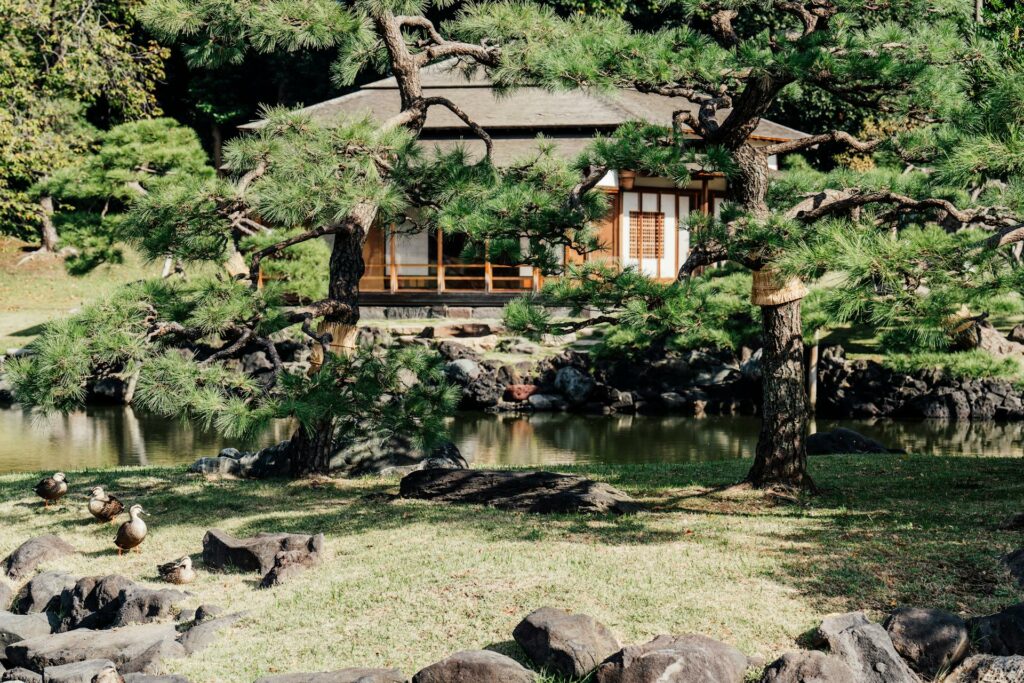
Shukkei-en in Hiroshima provides a powerful story of peace. Its name translates to the “contracted scenery garden” in English. The lovely design replicates famous landscapes in a miniature form. This garden suffered severe damage during the war in 1945. Its careful restoration became a clear symbol of the city’s rebirth. Today, it flourishes again as a true haven of beauty. Visitors can peacefully wander its paths and cross its bridges. This garden stands as a living testament to human resilience.
Koraku-en Garden in Okayama
Koraku-en is another one of Japan’s three great gardens. Its design follows the “scenery in the round” concept. Visitors can enjoy beautiful views from every single point. The garden features expansive green lawns, which are quite rare. Tea plantations and plum groves add to the garden’s charm. A central pond perfectly reflects the surrounding lovely scenery. The nearby Okayama Castle provides classic borrowed scenery for guests. This garden encourages very leisurely walks and relaxed family picnics.
A visit to a Japanese garden offers more than a simple walk. It is a profound and lasting experience for the human soul. A Japan tourist esim helps navigate between these tranquil sites easily. For a truly serene escape, these peaceful gardens await your visit.
